
Our smartphones have become digital wallets, photo albums, offices, and personal diaries all rolled into one. From banking apps and emails to business documents and private conversations, nearly every aspect of our lives is stored on these devices. Unfortunately, that also makes smartphones one of the most attractive targets for cybercriminals. Whether you’re an individual protecting personal information or a business securing company-owned devices, understanding phone hacking protection and data recovery is essential.
The good news is that most mobile security incidents can be prevented—or their impact minimized—with the right security practices and professional assistance.
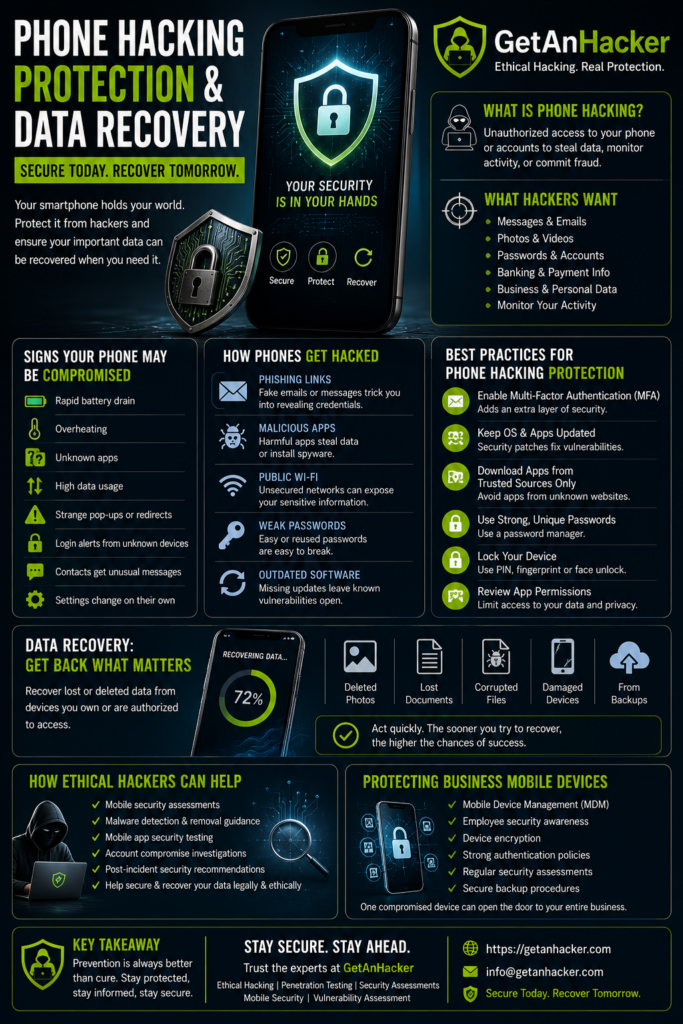
What Is Phone Hacking?
Phone hacking refers to unauthorized access to a mobile device or the accounts connected to it. Attackers don’t always need physical access to your phone. In many cases, they exploit weak passwords, phishing attacks, malicious apps, outdated software, or stolen login credentials to gain access.
Once inside, attackers may attempt to:
- Access emails and messages
- View photos and documents
- Steal saved passwords
- Monitor activity
- Access business applications
- Use your accounts for phishing or fraud
The goal isn’t always to steal the phone—it may be to steal the information stored on it.
Signs Your Phone May Be Compromised
A hacked phone doesn’t always display obvious symptoms, but some warning signs include:
- Rapid battery drain
- Overheating without heavy use
- Unknown apps appearing
- Increased data usage
- Frequent pop-ups or redirects
- Login alerts from unfamiliar locations
- Contacts receiving strange messages from your account
- Settings changing without your knowledge
While these issues don’t automatically mean your phone has been hacked, they deserve investigation.
How Phones Get Hacked
Phishing Links
One tap on a fake banking email or text message can direct you to a convincing login page designed to steal your credentials.
Malicious Applications
Apps downloaded from unofficial sources may contain spyware or malware that collects sensitive information.
Public Wi-Fi
Unsecured public networks can expose your data if you’re not using encrypted connections.
Weak Passwords
Reusing passwords across multiple accounts makes it easier for attackers to compromise several services after a single data breach.
Outdated Software
Operating system and application updates frequently contain important security fixes. Delaying updates leaves known vulnerabilities exposed.
Best Practices for Phone Hacking Protection
Protecting your phone doesn’t require advanced technical knowledge. Small habits can make a significant difference.
Enable Multi-Factor Authentication (MFA)
MFA adds an additional verification step, making it much harder for attackers to access your accounts even if they know your password.
Install Updates Promptly
Keep your operating system and apps updated to receive the latest security patches.
Download Apps Only from Trusted Sources
Use official app stores and review app permissions before installing new software.
Use Strong, Unique Passwords
A password manager can help you generate and store complex passwords securely.
Lock Your Device
Use a PIN, password, fingerprint, or facial recognition to protect physical access to your phone.
Review App Permissions
Periodically check which apps have access to your camera, microphone, location, contacts, and files.
What About Data Recovery?
Data recovery is different from hacking. It involves attempting to recover information from a device that you own or are legally authorized to access.
Examples include:
- Accidentally deleted photos
- Lost documents
- Corrupted files
- Data from damaged devices
- Information recovered from backups
- Recovery after malware removal
Not every file can be recovered, but acting quickly improves the chances of success.
How Ethical Hackers Can Help
Professional ethical hackers don’t break into other people’s phones. Instead, they help clients secure devices they own or are authorized to manage. Services may include:
- Mobile security assessments
- Malware detection and removal guidance
- Mobile application security testing
- Business mobile device reviews
- Account compromise investigations
- Post-incident security recommendations
- Guidance on protecting recovered data
These services are designed to strengthen security—not bypass someone else’s privacy or access controls.
Protecting Business Mobile Devices
For businesses, smartphones often provide access to:
- Corporate email
- Cloud storage
- Customer records
- Internal communication platforms
- Financial applications
- Multi-factor authentication apps
A single compromised device can create a pathway into larger business systems. Organizations should consider:
- Mobile Device Management (MDM)
- Employee security awareness training
- Device encryption
- Strong authentication policies
- Regular security assessments
- Secure backup procedures
Why Proactive Security Matters
Many people only think about mobile security after they’ve lost access to important information. By then, attackers may already have copied data or attempted to access connected accounts. Proactive security measures—combined with regular assessments—help reduce the likelihood of successful attacks and make recovery faster if an incident occurs.
At GetAnHacker (https://getanhacker.com/), ethical cybersecurity professionals help individuals and businesses strengthen mobile security, identify vulnerabilities in authorized systems, and improve their overall cyber resilience through ethical hacking, penetration testing, and security assessments.
Final Thoughts
Your smartphone is one of the most valuable devices you own—not because of the hardware, but because of the information it contains. Protecting that information requires more than a strong password. It requires awareness, regular updates, secure habits, and professional guidance when needed.
Whether you’re trying to improve your phone’s security or recover data from a device you own, taking action early is always better than responding after an incident. The sooner vulnerabilities are identified, the easier—and often less expensive—they are to resolve.